Quick answer A soft-top is the best beginner surfboard, because it is wide, stable and forgiving. Look for a long board with plenty of volume, since extra floatation makes paddling and catching waves easier. Hire a board before you buy one, and take a lesson so an instructor can help you choose.
Choosing a beginner surfboard can feel confusing, because there are so many shapes and sizes. The good news is that the answer is simple. This guide explains why soft-tops suit new surfers, what size to look for and when it makes sense to move on.
Why a soft-top is the best beginner surfboard
A soft-top has a foam deck instead of a hard shell. That soft surface makes it much more forgiving if the board hits you. It is also wide and thick, so it floats well and stays stable.
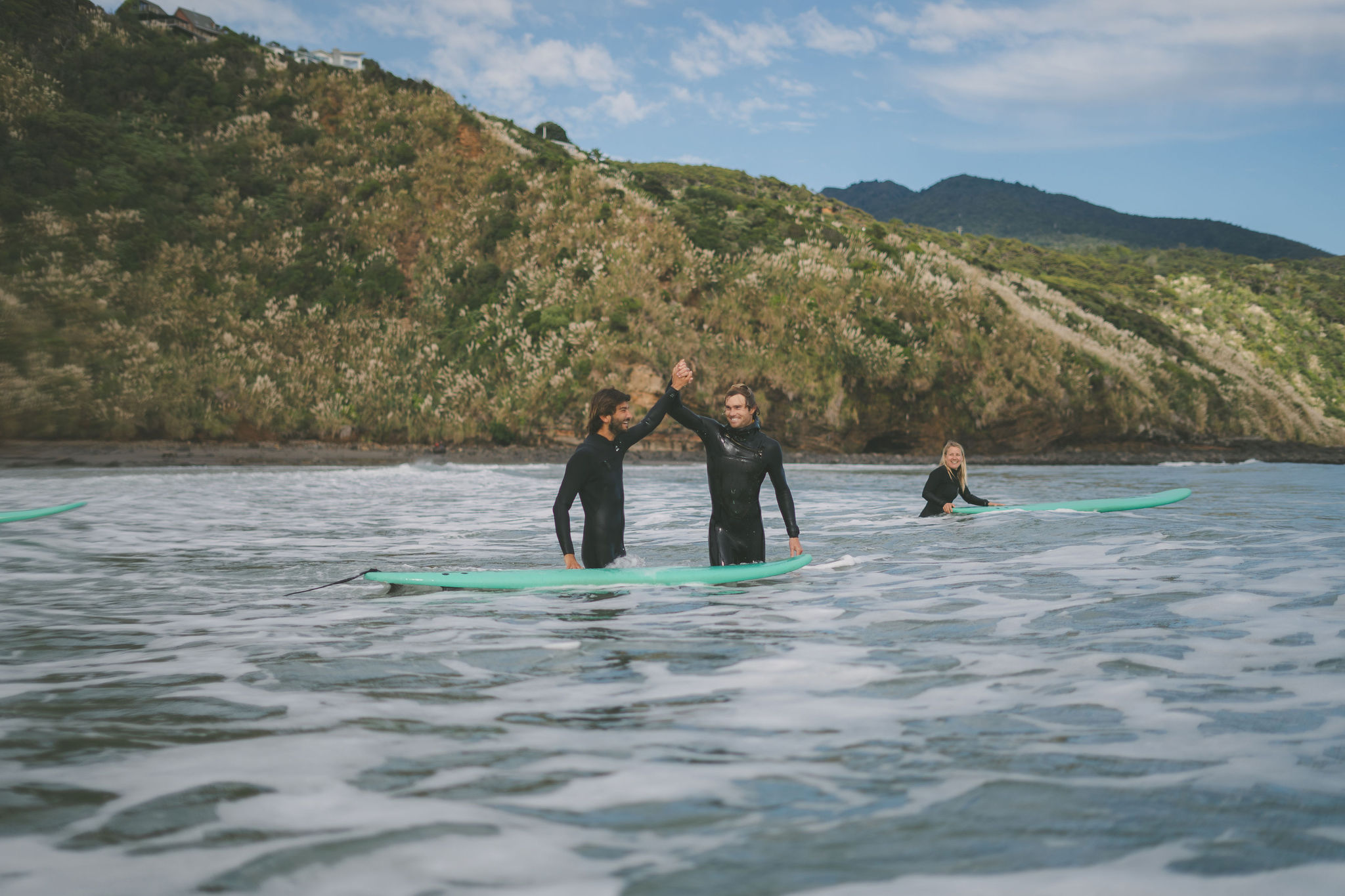
For a beginner, those qualities matter more than anything else. A stable board is easier to paddle, easier to stand on and kinder when you fall. Because of this, every one of our lessons uses soft-top boards.
Size matters: volume and length
Volume is the amount of space a board takes up. More volume means more floatation, so the board sits higher in the water and paddles faster. As a result, it catches waves more easily.
Many beginners start on a board that is long, wide and thick. As a rule, a bigger board is better while you are learning. Your instructor or a good board shop can help you pick the right size for your height and weight.
Soft-tops versus hard boards
Hard boards, such as epoxy or fibreglass boards, are lighter and more responsive. They turn faster and feel quicker. However, they are also harder to balance on, and they can hurt more if they hit you.
For that reason, we recommend a soft-top for every beginner surfboard purchase or hire. Once you can catch green waves and turn with confidence, you can think about a harder board. Until then, a soft-top gives you the best chance of progress.
Hiring a beginner surfboard before you buy
It is wise to hire a board before you buy one. Your needs change quickly in the first few weeks, and a board that suits you today may feel too big a month from now. Hiring also lets you try different sizes.
At Green Wave, a half-day surfboard and wetsuit hire costs $40. We have soft-top boards in various sizes, plus some epoxy boards. Read our guide to surfboard hire in Raglan for the full details.
What to look for when you buy a beginner surfboard
If you decide to buy, keep these points in mind:
- plenty of volume, so the board floats well
- a soft, foam deck for comfort and safety
- a wide shape for stability
- sturdy construction that can handle knocks
- a size that you can carry easily to the beach
A second-hand soft-top is often a sensible first purchase. Check the board for damage before you buy.
Do you need a leash?
Yes. A leash attaches the board to your ankle, so it stays close when you fall. That keeps the board from drifting into other people, and it saves you a long swim. Always check the leash before each session, and replace it if it looks worn.
Remember to hold your board when you fall, and protect your head. Our guide to surf etiquette covers how to handle your board around other surfers.
When to move to a smaller board
You are ready to move on when you can catch green waves regularly, and you want to turn more sharply. A smaller board can be exciting, but it takes more skill. Moving too soon often slows your progress.
Talk to a coach before you make a change. They can watch you surf and suggest the right step. Our multi-day packages are a good way to build the skills for a smaller board.
Common mistakes when choosing a board
Many new surfers buy a board that is too small, because it looks cool. In fact, a small board is harder to paddle and harder to stand on, so progress slows down. Others skip the leash, or choose a board that is too heavy to carry. Also, some people buy before trying anything. To avoid these problems, get advice first, and try a few boards if you can.
Looking after your board
A little care extends the life of any board. Rinse it with fresh water after each session, and keep it out of direct sun for long periods. Store it somewhere cool, and use a cover when you travel. Also, repair any dings quickly, so water does not soak into the foam.
Learn with the right gear
The right board is only part of the picture. Good coaching, a safe beach and the right conditions matter just as much. Our lessons at Ngarunui Beach include a board, a wetsuit and free photos. You can see the details on our lessons page. For wider beach safety, Surf Life Saving New Zealand is a trusted resource.
Frequently asked questions about choosing a beginner surfboard
A soft-top is the best choice for beginners. It is wide, stable and forgiving.
Hire first. Your needs change quickly, and hiring lets you try different sizes.
Yes. A half-day surfboard and wetsuit hire costs $40, and we have soft-tops in various sizes plus some epoxy boards.
Need a board for your lesson? Book a lesson and we will supply one.