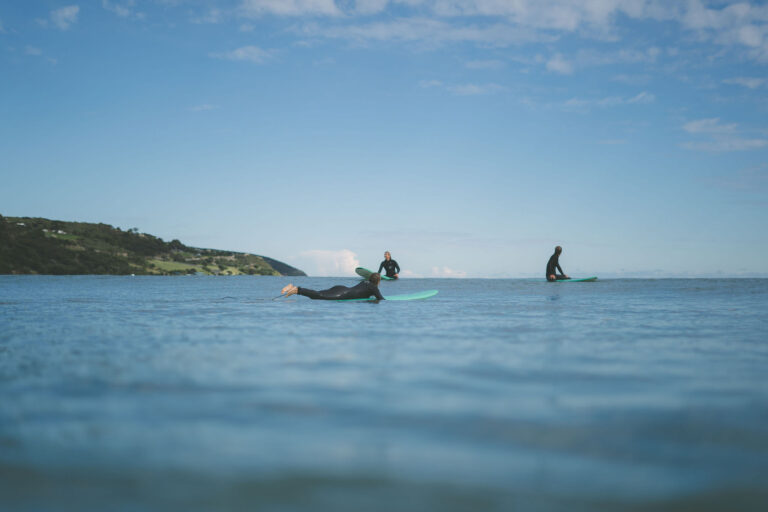
Quick answer Sun safety for surfers means applying sunscreen before you go out, wearing a rash vest or wetsuit, drinking plenty of water and seeking shade between sessions. The sun reflects off the water, so you can burn even on cloudy days. Bring sunscreen to every Green Wave lesson.
Sun safety for surfers is one of the most important habits you can build. New Zealand sun can be strong, and the water reflects it. This guide covers how to protect your skin, eyes and energy, so you can surf comfortably and stay healthy.
Why sun safety for surfers matters
Surfers spend hours in the sun. The light hits you from above, and it bounces off the water too. As a result, you get a double dose. Even on cloudy days, UV can burn your skin.
Because of this, sun protection is not optional. Good habits protect you today, and they protect your skin for years to come.

Sun safety for surfers starts with sunscreen
Put sunscreen on before you leave your accommodation. That way, it has time to absorb before you reach the water. Cover your face, neck, ears, hands and feet, since these areas are often missed. Choose a water-resistant sunscreen, and follow the directions on the label.
Also, reapply when you can. After the lesson, apply more before you go back out in the sun.
Sun safety for surfers: the right clothing
Clothing is one of the best forms of sun protection. A wetsuit covers most of your body, and our wetsuits are included in every lesson. For summer, a rash vest or long-sleeved top adds extra cover. On the beach, wear a hat and sunglasses.
If your skin is sensitive, cover up as much as you can. Also, choose light-coloured clothes for the beach.
Protect your face and lips
The face gets the most sun, and it is the hardest area to cover. Use a face sunscreen or zinc, and apply it carefully. A lip balm with SPF protects your lips as well. Because salt water can wash sunscreen off, reapply it after each session.
Timing and shade
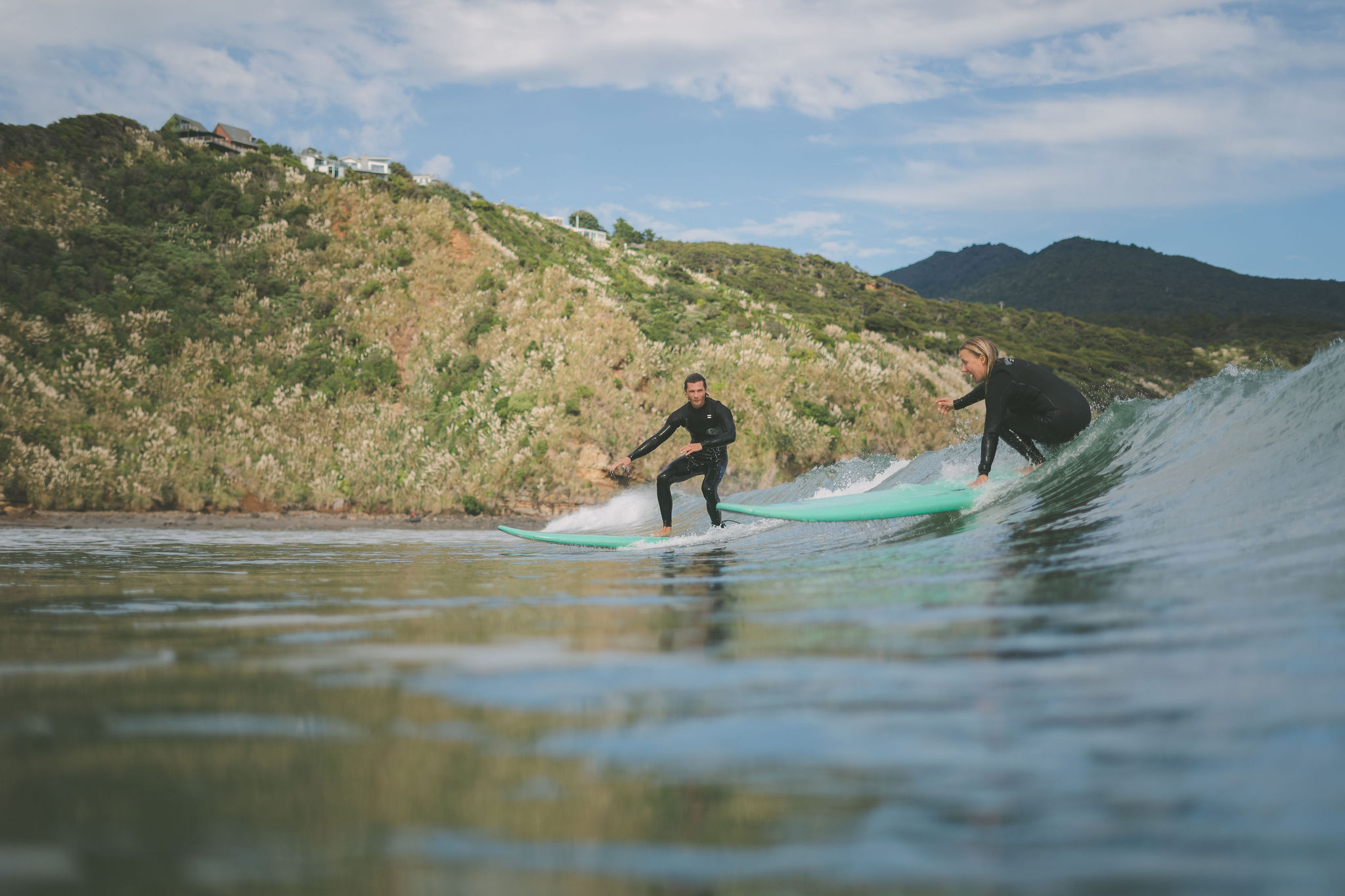
The sun is strongest in the middle of the day. If you can, surf earlier or later. Our lesson times follow the tide, so they change each fortnight. You can check the schedule on our lessons page. Between sessions, rest in the shade.
Stay hydrated
Sun and exercise dry you out. Drink water before, during and after your lesson. Bring a bottle, and keep it in the shade. If you feel dizzy, tired or headachy, stop and rest. Our guide on what to bring to a surf lesson lists the essentials.
Sun safety for surfers in winter
Do not skip sunscreen in winter. UV is lower, but it is still present, and the water still reflects it. Cool air can also make you forget about the sun. Read our guide to winter surfing in Raglan for more tips.
Sun safety for kids and school groups
Children burn easily, so they need extra care. Remind students to apply sunscreen, wear hats and drink water. Teachers can send a note home with the packing list. Our guide to school surf trips has more planning ideas. Our group lessons suit ages 10 and up.
Eye protection
Your eyes need protection too. On the beach, wear sunglasses, and choose a pair that blocks UV. Because glare off the water can be intense, a hat with a brim also helps. Squinting is hard on your eyes, so try to give them a rest between sessions. Also, if your eyes feel sore or sensitive after a day outdoors, rest them in the shade and drink water.
Common sun safety mistakes
Many surfers make the same few mistakes. First, they apply sunscreen too late, or too thinly. Second, they forget areas such as the ears, the back of the neck and the tops of the feet. Third, they assume that cloud means safety, but UV passes through it. Also, some skip protection in winter, which can lead to burn. To avoid these problems, make sunscreen part of your routine. Then you will not have to think about it.
A simple checklist
Run through this list before every lesson:
- sunscreen applied before you leave
- a rash vest or wetsuit for cover
- a hat and sunglasses for the beach
- water, kept in the shade
- extra sunscreen for afterwards
Because these habits take only a few minutes, they are easy to follow. As a result, you stay comfortable and protected all day.
After your session
Once you are out of the water, rinse off, dry yourself and apply more sunscreen if you plan to stay outside. Put on a hat and warm clothes. If your skin feels hot or looks red, move into the shade and drink water. For more guidance on skin and beach safety, Surf Life Saving New Zealand is a helpful resource.
Frequently asked questions about sun safety for surfers
Yes. UV passes through cloud, and the water reflects it.
Apply sunscreen to any skin that will be exposed, such as your face, neck, hands and feet.
Bring sunscreen, water, a towel and warm clothes. We supply the board and wetsuit.
Ready for a lesson? Book now and remember your sunscreen.