Quick answer Rip currents are narrow channels of water that flow away from the beach. To spot them, look for a gap in the breaking waves, darker water or foam moving out to sea. If one catches you, stay calm, float and signal for help rather than fighting the current. Always check the conditions with a lifeguard or instructor first.
Every beach visitor should know about rip currents, because they are one of the main hazards in the surf. They can look harmless from the shore. This post explains what they are, how to spot them and what to do if one catches you, so you can enjoy the beach with confidence.
What are rip currents?
A rip is a strong flow of water that runs from the shore back out to sea. Waves push water towards the beach, and that water needs somewhere to go. Often, it finds a channel and flows back out in a narrow stream.
Rips are not rare. In fact, most surf beaches have them at some point, and they can change from day to day. They are not whirlpools, and they do not pull people under the water. Instead, they carry swimmers away from the shore, which can be frightening and tiring.
How rips form
Rips form when waves break unevenly across a beach. For example, where the sand is deeper, the waves break less, and the water flows out through the gap. Also, the shape of the sand bottom, the size of the swell and the tide all play a part.
Because those things change, a rip can move or fade away within hours. That is one reason we explain the conditions at the start of every lesson. Our post on tides for surfing shows how the water level affects the beach.
How to spot rip currents
However, learning to read the water is a skill that takes practice. Still, a few signs can help. Look for:
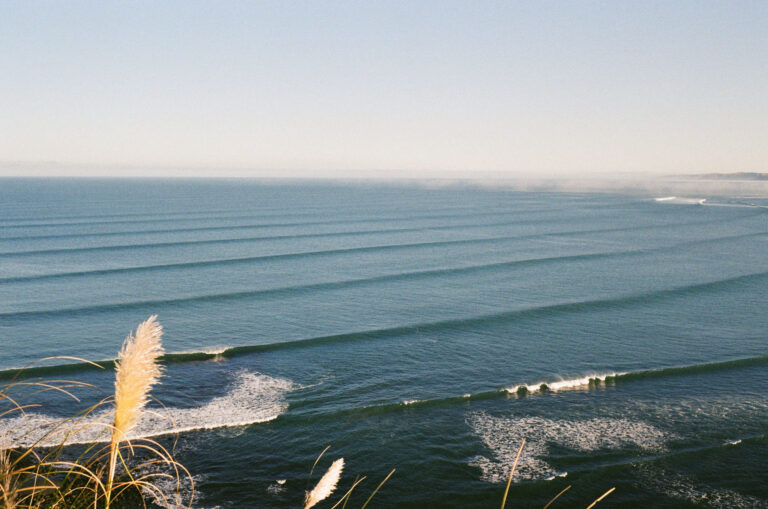
- a gap in the line of breaking waves
- water that looks darker, because it is deeper
- a rippled or choppy patch while the water around it is smooth
- foam, seaweed or sand moving steadily out to sea
- a calm-looking channel between two areas of whitewater
It also helps to watch the water for a few minutes before you get in. From a high spot, such as a dune or lookout, the pattern is often easier to see.
What to do if you are caught in a rip
The most important thing is to stay calm. Panic wastes energy, and a rip usually does not pull you far. Try these steps:
- Float, and keep your head above water.
- Do not swim directly against the current, because you will tire quickly.
- Raise one arm and call or wave for help.
- Once you feel the pull ease, swim parallel to the shore, then head back in.
If you have a surfboard, hold on to it. A board gives you plenty of buoyancy, and it makes you easier to see. For official guidance, Surf Life Saving New Zealand has clear advice on beach safety.
How we teach rip safety in lessons
Before any student enters the water, our instructors run a beach briefing. We explain the conditions on the day, including tides, swell and rips. Students learn how to spot a rip and what to do if they are caught in one.
Then, we choose a spot where beginners can stand in waist to chest deep water. The sandy bottom at Ngarunui Beach lets you touch the ground between waves. Because our groups stay small, instructors can keep a close eye on everyone. Read our guide to your first surf lesson for the full picture of the day.
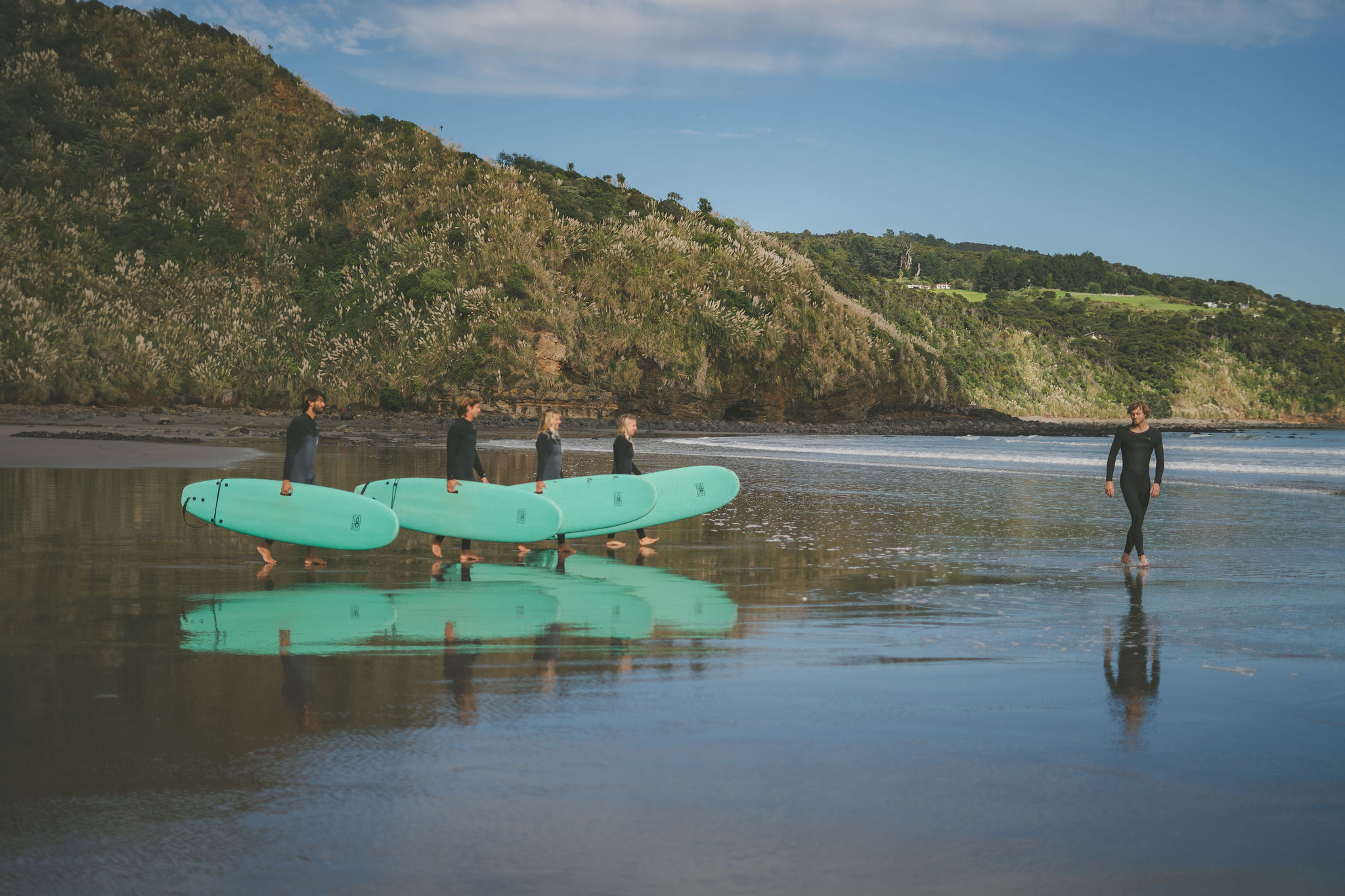
Rip currents and surfers
Experienced surfers sometimes use a rip to get past the waves quickly. They know how to read it and how to leave it safely. For beginners, however, that is a bad idea. Instead, a newcomer should stay in the shallow whitewater and avoid areas where water is flowing out.
At the point breaks, the water also moves around rocks and headlands. For that reason, we do not take students there. Our guide to Raglan’s point breaks explains the extra hazards.
Tips to stay safe at the beach
A few simple habits go a long way:
- Swim and surf between the flags where a beach is patrolled.
- Watch the water before you get in.
- Never go out alone, and tell someone where you are going.
- Ask a lifeguard or instructor about the day’s conditions.
- Stay within your depth, and head in when you feel tired.
- Keep younger swimmers within arm’s reach.
Our FAQ page answers more questions about lessons and safety.
Learn the ocean with a lesson
The best way to understand rips is to learn alongside someone who reads the water every day. Our instructors know how Ngarunui behaves on each tide, so they pass that knowledge on to every student. A lesson also gives you the chance to ask questions in a safe setting. When you are ready, you can book a lesson with our team.
Frequently asked questions about rip currents
No. A rip carries water away from the shore. It does not pull people under, but it can carry swimmers further out than they expect.
Stay calm, float and signal for help. Do not fight the current, and swim parallel to the shore once the pull eases.
Yes. Every lesson starts with a beach briefing on tides, swell and rips.
Want to learn how to read the water? Book a lesson with Green Wave.