Quick answer Good surf fitness helps you paddle longer, pop up faster and recover more quickly. Focus on shoulders, core and legs, plus balance and flexibility. A few simple exercises a few times a week are enough to prepare for a beginner lesson. Check with a doctor first if you have a medical condition.
You do not need to be an athlete to start, but a little surf fitness makes your lessons much more enjoyable. Paddling uses muscles that most people do not train, so it helps to prepare. This guide shares simple exercises you can do at home.
Why surf fitness matters
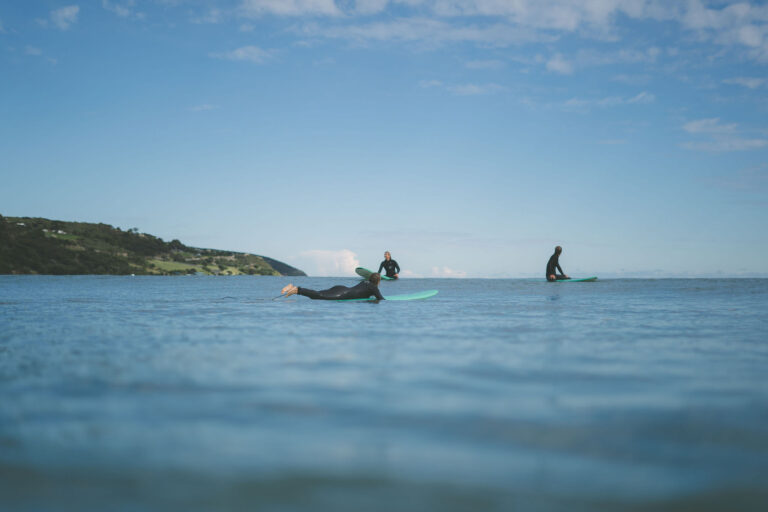
Surfing is a full-body activity. You paddle with your arms and shoulders, balance with your core and stand with your legs. Because of this, a day in the water can feel tiring, especially if you are new.
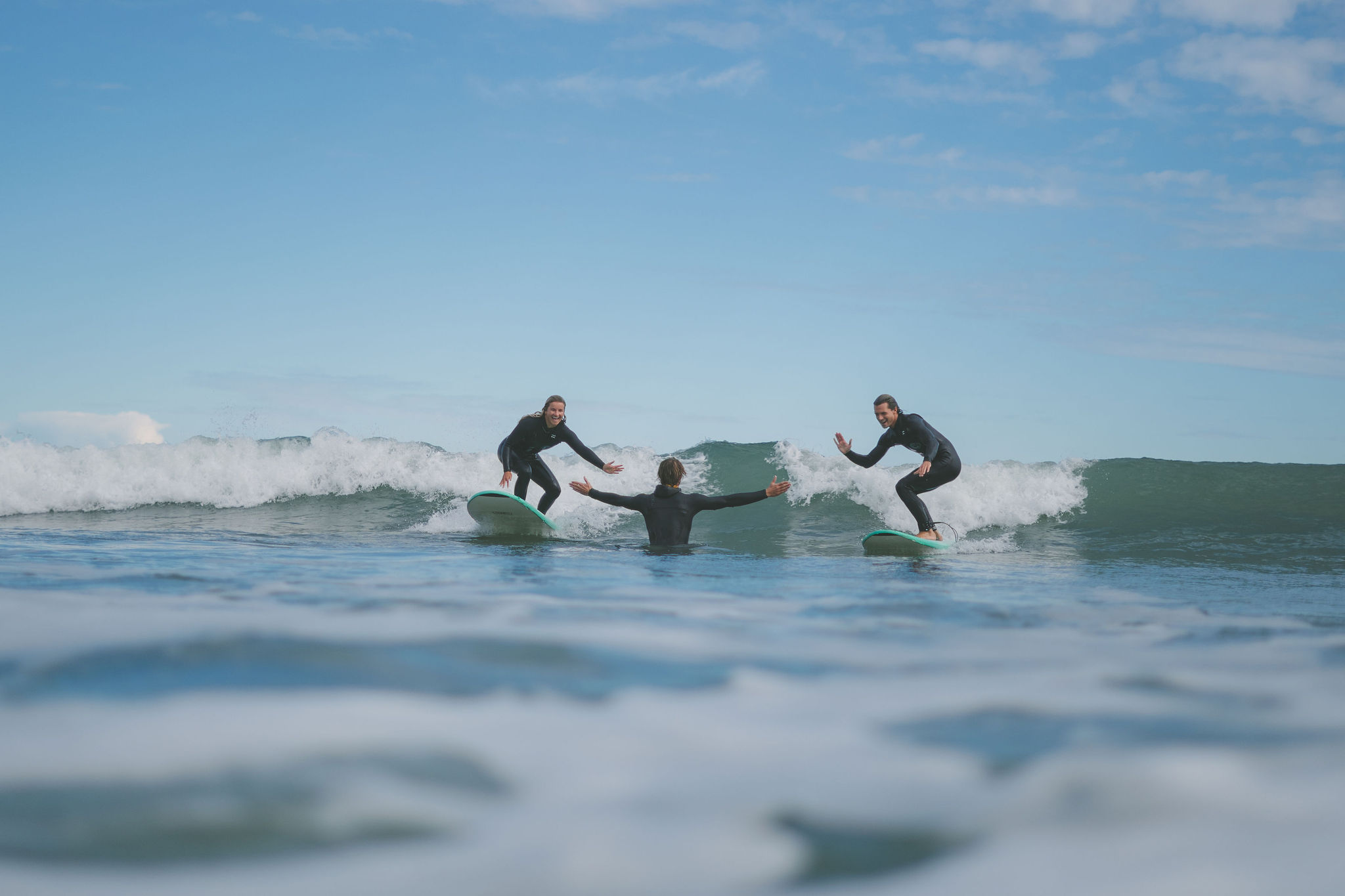
The good news is that you can build the right fitness quickly. With a little work, you will paddle longer and stand up with more control. As a result, you will spend more time catching waves and less time catching your breath.
Also, fitness helps you stay safe. When you are tired, it is harder to paddle back to shore or keep your balance. So a little preparation makes the whole day more comfortable, and it lets you focus on having fun.
A note on surf fitness before you start
These exercises are general ideas, not medical advice. If you have an injury or a health condition, check with a doctor before you begin. Also, listen to your body, and stop if something hurts. Warm up first, and go at your own pace.
Finally, if you have not exercised for a while, start gently. A short walk each day is a perfectly good beginning.
Surf fitness for paddling: shoulder strength
Paddling is the hardest part for most beginners, so start with the shoulders. Try these:
- Push-ups: on your knees or toes, with your hands under your shoulders
- Superman holds: lie on your belly and lift your arms and chest slightly
- Band pulls: use a resistance band to pull your arms back
Do two or three sets, a few times a week. Increase the number slowly.
Core strength for balance
A strong core helps you balance and pop up. A plank is a great place to start. Hold it for as long as you can, and rest between sets. Also, try side planks and gentle twists. Over time, you will feel steadier on the board.
Leg strength and the pop-up
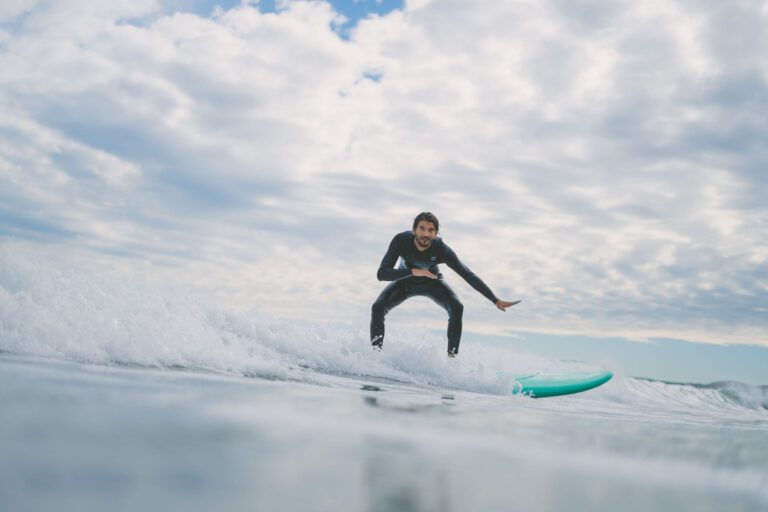
Your legs do a lot of work when you stand up. Squats and lunges build the strength you need, and they help with balance. Practise the pop-up itself as well. Our guide on how to pop up on a surfboard explains the steps.
Flexibility and mobility
Stretching helps you stay loose in the water. Focus on your shoulders, back, hips and legs. Yoga is excellent for this. The Space Raglan is a yoga studio in central Raglan, and our four day package includes a free yoga class. Read about progressive surf lessons for more details.
Cardio and swimming
Paddling is also a cardio workout. Walking, jogging, cycling and swimming all build stamina. If you can, spend time in the ocean or a pool before your trip. Swimming skills help in the long run, but they are not required for our lessons.
A simple weekly surf fitness routine
Here is an easy plan for the weeks before your trip:
- three short strength sessions each week
- two cardio sessions, such as a walk or swim
- a few minutes of stretching each day
- some pop-up practice on the floor
Keep it fun, and do not overdo it. Rest is part of getting fit.
Common mistakes when training
Many beginners train in a way that does not help. For example, some focus only on big arm muscles, and they forget about the core and legs. Others train too hard, too soon, and they end up sore or injured. Also, some skip warm-ups and stretching, which makes tight muscles worse. Instead, aim for balance across the whole body, and build up slowly. Because surfing mixes strength, balance and stamina, variety works best.
Recovery after surfing
Recovery matters just as much as training. After a session, drink water and eat something with protein and carbohydrates. Then stretch gently, especially your shoulders, back and hips. Also, get a good night’s sleep, because your body repairs itself while you rest. If you surf several days in a row, expect some soreness, and take it easy on the evenings. A yoga class or a short walk can help you loosen up.
On the day
Eat a light meal and drink water before your lesson. Warm up on the beach with some gentle stretches. After the lesson, rest, drink more water and eat something. See our guide on what to bring to a surf lesson for the full list. For safety advice, Surf Life Saving New Zealand is a helpful resource.
Frequently asked questions about surf fitness
No. A little fitness helps, but our lessons suit a wide range of beginners.
Surfing uses your shoulders, core, legs and back.
A few short sessions each week for a few weeks is plenty for a beginner lesson.
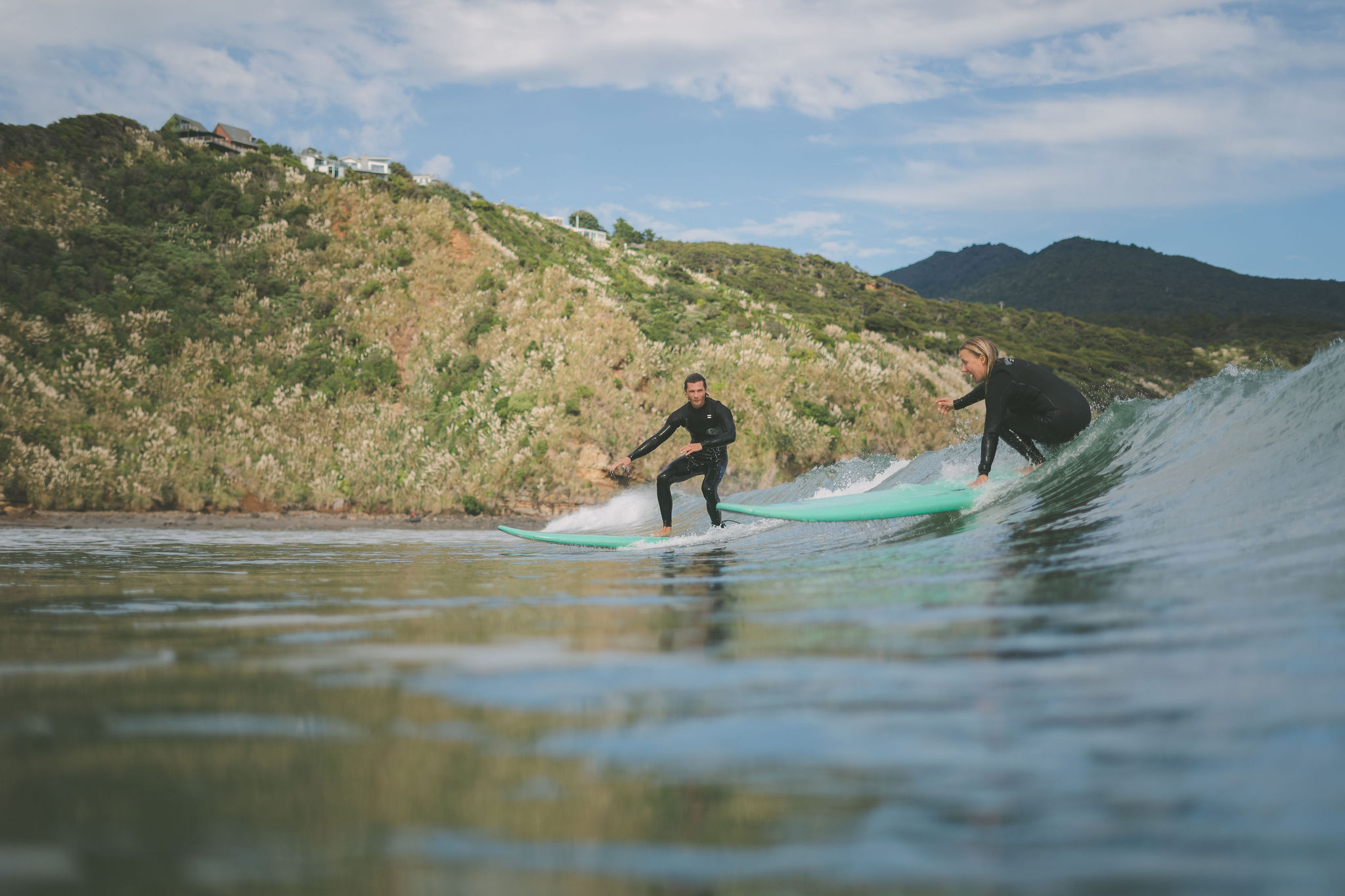
Feeling ready? Book a lesson and we will see you at Ngarunui.