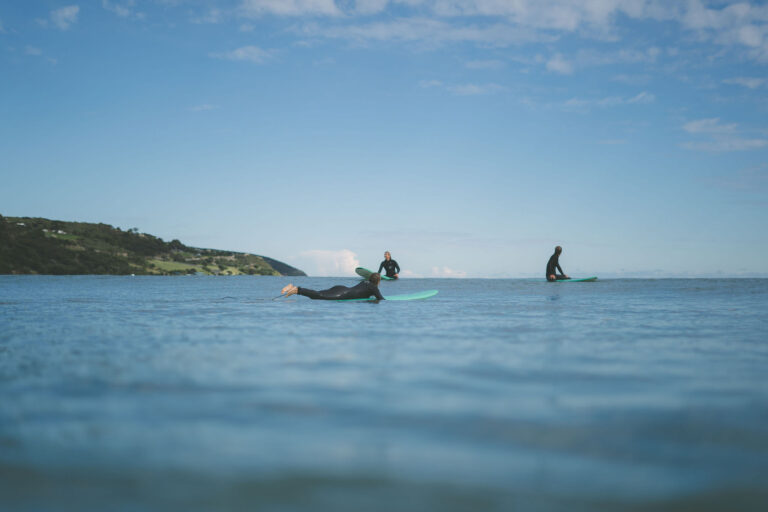
Quick answer EOTC surfing works well for schools, because it combines health and fitness, ocean science and teamwork. Green Wave runs school programmes all year at Ngarunui Beach, and each session starts with a safety briefing. We can help with the information you need for your risk management plan.
EOTC surfing is a popular choice for schools looking for a memorable day outside the classroom. Surfing builds confidence, fitness and teamwork, and it ties neatly into the curriculum. This post explains how to plan a surf day, from risk management to logistics.
Why schools choose EOTC surfing
First, education outside the classroom gives students real experiences. Surfing is one of the most engaging options, because every student starts on equal footing. Most have never tried it, so groups bond quickly and cheer each other on.
Our programmes also link to learning. We use surfing to teach health and fitness, environmental education and ocean science, including tides, swell and currents. As a result, students leave more confident in the ocean, and they understand how it changes.
Safety and risk management
Safety is the first question teachers ask, and it is the first thing we cover. Before students enter the water, our instructors run a beach briefing on tides, rips and swell. Students learn how to spot a rip and what to do if caught in one.
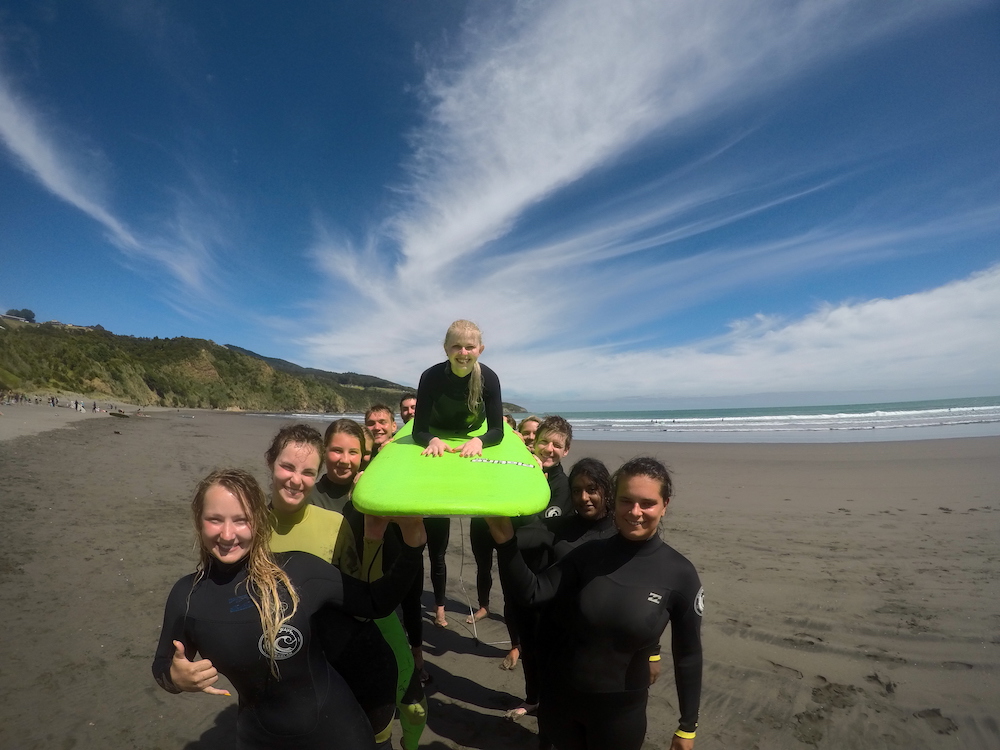
Also, lessons take place at Ngarunui Beach, which has a sandy bottom and gentle whitewater. In addition, students stay in waist to chest deep water, with instructors beside them. We never take students to the rocky point breaks. For your planning, the Ministry of Education’s guidelines for education outside the classroom are a useful reference.
Planning EOTC surfing for your school
First, choose your date and group size. We can host any number of students, and we run school programmes any time of year. Then get in touch through our contact page, with your dates, group size and year levels.
Next, we will send you pricing and a suggested programme. After that, we can tailor the plan to suit your learning goals and your risk management process. We are happy to help with the information you need.
How a school surf day runs
A typical day follows a simple flow:
- Students arrive at Ngarunui Beach and get fitted with wetsuits and soft-top boards.
- Instructors run a safety briefing and practise paddling and the pop-up on the sand.
- Students head into the shallows in small groups with an instructor.
- The group wraps up with a debrief on the beach.
We time sessions around the tide, so we will confirm the best start time when you book.
Group size and supervision
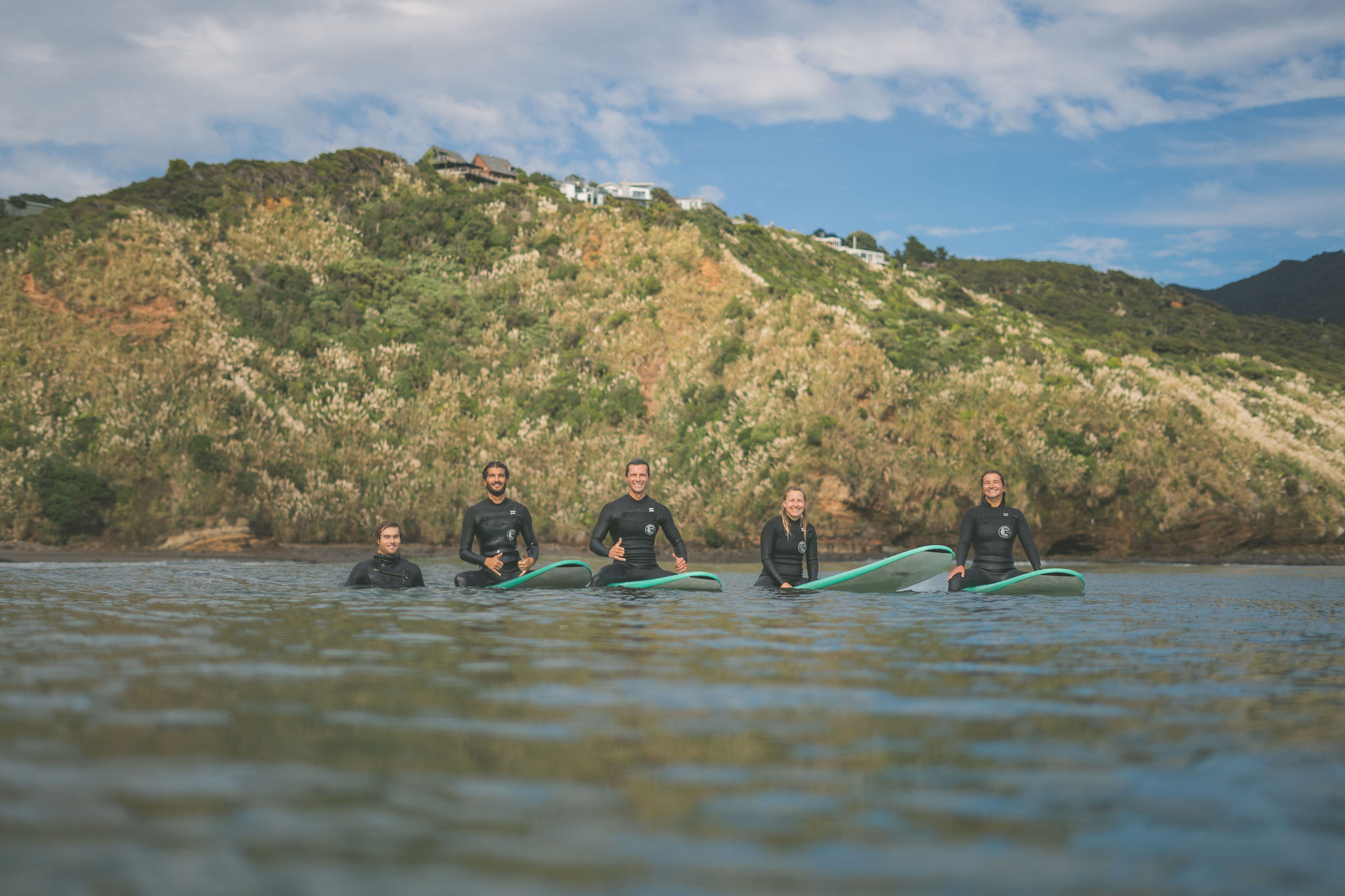
Large groups are split into small teams, each with its own instructor. That way, every student gets attention and plenty of waves. Teachers also stay involved, and they help with supervision on the beach. Please talk to our team about your group’s needs, so we can plan the right set-up.
What students should bring
Students need only a few personal items: a towel, a bottle of water, sunscreen and warm clothes. Also, a snack is a good idea. We supply the boards and wetsuits. See our guide on what to bring to a surf lesson to share with parents.
Linking EOTC surfing to the curriculum
Surfing connects with several learning areas. Students can explore physical education through fitness and movement. They can also learn science through tides, swell and currents. They can also explore environmental education through coastal care and respect for the ocean. Our guide to ocean safety for students covers what they learn on the beach.
Talking to parents
Parents often have questions, so it helps to share the plan early. First, send a short note home with the date, the meeting place and the packing list. Then tell parents about any medical or dietary needs they should pass on. Also, remind students to bring a water bottle and to put on sunscreen. Because our team needs to know about any health concerns, please share them before the day. That way, instructors are prepared, and every student feels looked after.
After the trip
Once the day finishes, take time to reflect. Back at school, ask students what they learned about the ocean and what they found hard. Next, let them share their photos and stories. Surfing often sparks conversations about courage, patience and teamwork. As a result, the trip keeps paying off long after the wetsuits are dry. Also, many teachers use the experience as a writing task or a science project.
Combining a surf day with a camp
Many schools combine a surf session with a longer stay. Read our guide to a school camp in Raglan for ideas on accommodation and extra activities. We recommend Raglan Holiday Park for group accommodation. Our full guide to school surf trips covers more of the logistics.
Frequently asked questions about EOTC surfing
Yes. We are happy to provide the information you need for your plan.
We can host any number of students. Large groups are split into small teams.
School programmes run any time of year, as single-day or multi-day trips.
Ready to plan your trip? Contact us with your dates and group size.