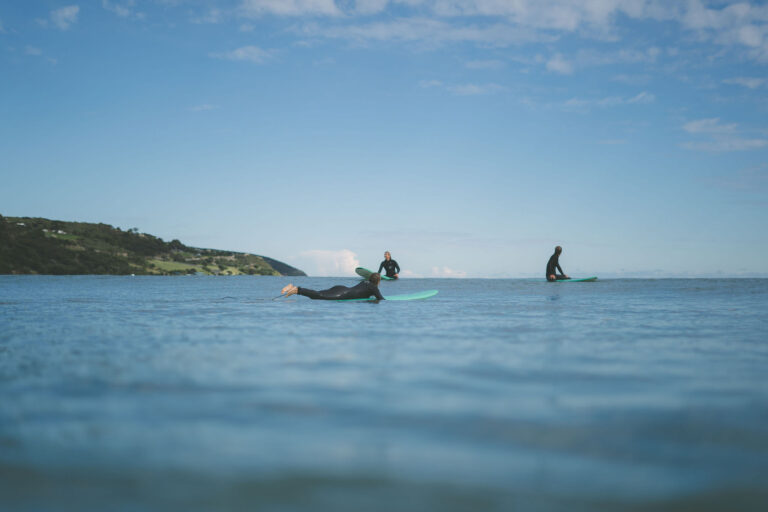
Quick answer Raglan point breaks such as Manu Bay and Whale Bay are world famous, but they are not for beginners. They have sharp rocks, strong currents and busy line-ups. Beginners learn at Ngarunui Beach, which has a sandy bottom and gentle whitewater, and we never take students to the points.
The Raglan point breaks are among the most famous waves in the world. Surfers travel from across the globe to ride them. However, they are not the right place to learn. This post explains why, and how to build the skills you need before you try them.
What are the Raglan point breaks?
A point break is a wave that breaks along a headland or rocky point. The wave peels slowly along the shore, so it creates long, smooth rides. Raglan is famous for its long left-hand waves, and spots such as Manu Bay and Whale Bay draw surfers from all over the world.
From the lookout, the waves look beautiful and inviting. Also, watching them is a highlight of any visit. Still, they ask a lot of the surfer.

Why the Raglan point breaks are not for beginners
There are several reasons. First, the bottom is rocky, with sharp rocks that can cut and bruise. For example, a fall that is harmless on sand can hurt on rock.
Second, the line-ups are busy and experienced. Surfers there paddle fast and know the rules. A beginner in the way can cause a collision. Third, currents and the wave shape make it harder to paddle back out. Together, these factors make the points a serious challenge.
Beginners can also feel overwhelmed by the speed of the waves. Everything happens faster at a point, and mistakes have bigger consequences. Because of this, it is better to build your skills where the water is gentler, and move on once you are ready.
Where beginners should learn instead
Beginners learn at Ngarunui Beach. It also sits just outside town, with a big carpark, changing blocks and toilets. The bottom is sandy, and the whitewater near shore is soft and slow.
Beginners stay in waist to chest deep water, so you can stand between waves. So that is the safest way to build skills. Our guide on learning to surf in Raglan explains the whole process.
Why we stay at Ngarunui
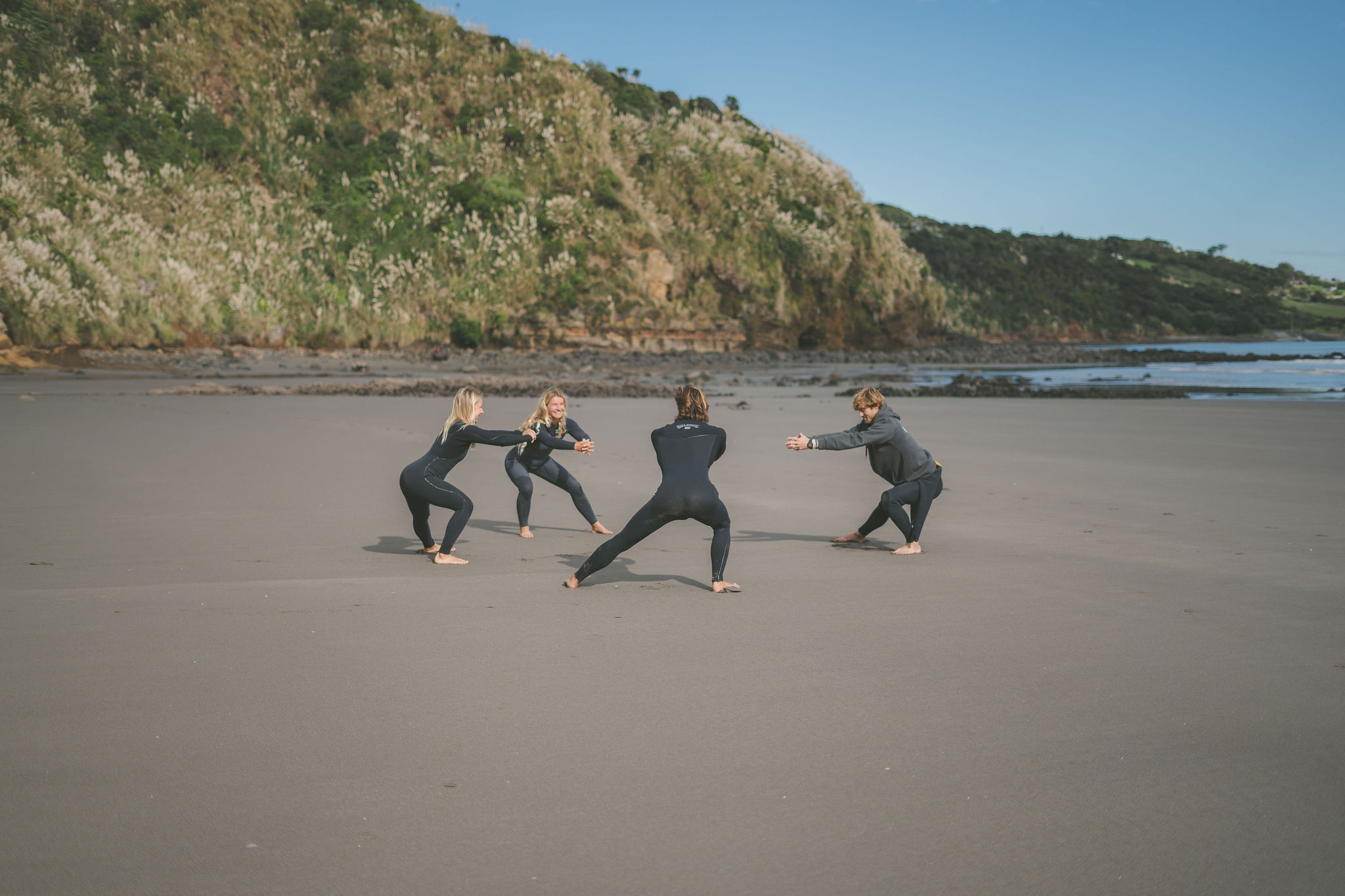
Our instructors know exactly where beginners can learn safely. The three owners have more than 30 years of combined teaching experience, and they choose the spot based on the conditions each day. Because of this, students spend their time in the shallows, with an instructor beside them.
Plus, the sandy bottom means falls are soft and recoveries are quick. Beginners can focus on the fun rather than on the hazards. School groups follow the same rule, and you can read more in our guide to school surf trips.
What a surfer needs before trying the points
However, moving to the point breaks takes time. A surfer should be able to:
- catch green waves on their own
- paddle fast and turn on demand
- read the water and the line-up
- follow surf etiquette without thinking
- handle a fall and a long paddle back
Most surfers need a few years of experience before they have all of these skills. Overall, there is no shortcut.
The role of surf etiquette
Etiquette matters more at the points than anywhere else. The line-up is full of skilled surfers who expect others to follow the rules. If you drop in or paddle through the wrong spot, you can cause danger and anger. Read our guide to surf etiquette before you ever paddle out at a busy break.
Reading conditions at the points
Wind, tide and swell all change how the points behave. Some waves work best on certain tides, and a big swell can make them powerful and dangerous. Learning to read a forecast helps you decide whether it is a good day to surf. See our guide to reading a surf forecast. You can also read our post on tides for surfing.
Enjoying the points as a spectator
You do not need to surf the Raglan point breaks to enjoy them. The lookouts are great places to watch. Then take a coffee, sit back and see how the best surfers ride. You will pick up plenty of ideas, such as how they position themselves and read waves. Our Discover Raglan page has more things to see and do around town. You can also read about Raglan’s surf spots.
Building towards the points
If the points are your goal, plan to build up gradually. Start with lessons, then practise on the beach. Over time, you can work on turning and reading waves. A multi-day package helps you progress quickly, because coaching shows you what to improve. See our lessons and packages for details. For wider beach safety, Surf Life Saving New Zealand is a helpful resource. Patience pays off, because every year of practice makes the points safer and more rewarding.
Frequently asked questions about Raglan point breaks
We do not recommend it. The points have sharp rocks, busy line-ups and strong currents. Beginners learn at Ngarunui Beach.
All of our lessons are held at Ngarunui Beach, which has a sandy bottom and gentle whitewater.
Most surfers need a few years of experience first. A coach can tell you when you are ready.
Want to build up to the points? Book a lesson and start at Ngarunui.