Quick answer The most common beginner surfing mistakes are looking down, paddling in the wrong spot on the board, standing too tall and trying to progress too quickly. Fix them by looking where you want to go, lying in the middle of the board and keeping your knees bent. A coach can spot habits you cannot feel yourself.
Everyone makes beginner surfing mistakes, and that is completely normal. The trick is to spot them early and fix them. This guide covers the mistakes our instructors see most often, and the simple changes that help you progress faster.
Why beginner surfing mistakes happen
Surfing is hard at first. Your body is learning new movements, and the ocean keeps changing. As a result, small errors creep in. Most are easy to fix once you know what to look for.
Also, remember that every surfer starts somewhere. Even the best surfers made the same beginner surfing mistakes. Do not be hard on yourself, and enjoy the process.
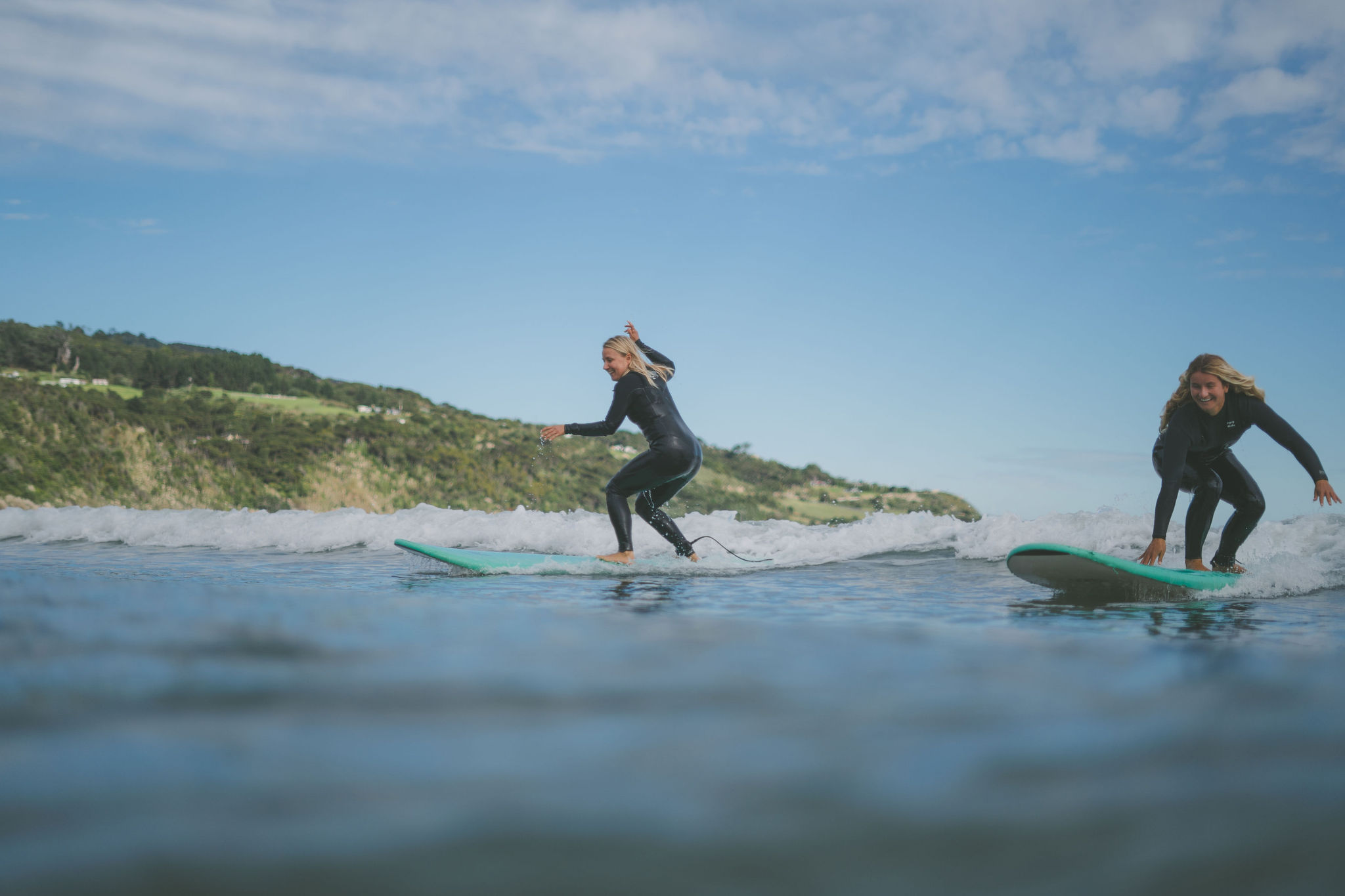
Also, it helps to know that progress is rarely a straight line. Some days everything clicks, and other days nothing does. Because of this, patience is one of the most useful skills a surfer can have.
Beginner surfing mistakes: looking at your feet
This is the most common mistake. When you look down, your body follows your eyes, and you lose balance. Instead, look at where you want to go, such as the beach. Your board will follow your gaze.
Instead, try a short mental cue, such as the words “eyes up”. Then repeat it each time you paddle for a wave.
Lying in the wrong spot on the board
If you lie too far back, the nose lifts and you slow down. If you lie too far forward, the nose digs into the water. Aim to lie in the middle, with the nose just above the surface. Ask your instructor to check your position. Pick a landmark, such as a hill or a building, and keep your eyes on it. That simple habit often fixes the problem straight away.
Standing too tall: a classic beginner surfing mistake
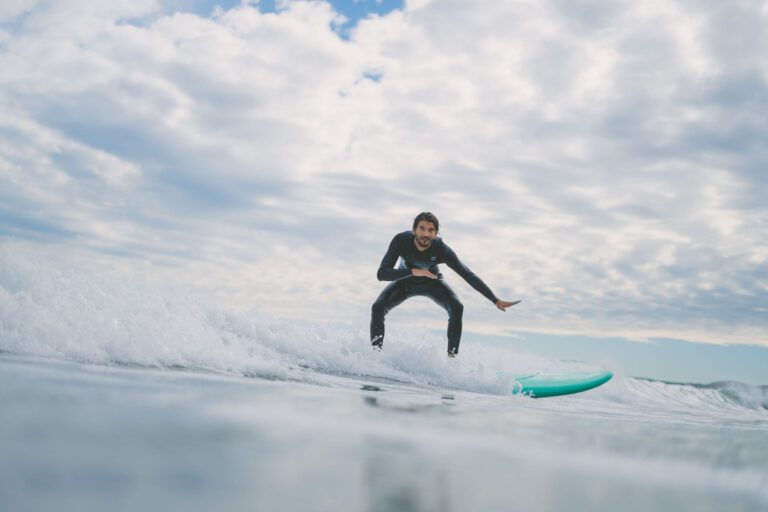
Many beginners stand straight up, which makes them unstable. Instead, keep your knees bent and your body low. A low stance lowers your centre of gravity, so you balance better. Our guide to how to pop up on a surfboard covers this in detail.
Kneeling before standing
Some beginners go from lying to kneeling to standing. It feels safer, but it slows you down. Practise going straight to your feet on the sand. Once the movement feels natural, it is much easier in the water.
Beginner surfing mistakes with wave choice
Choosing the wrong wave is another common problem. Beginners often paddle for waves that are too big or too steep. Start with whitewater, because it is slow and forgiving. When you are ready, move to smaller green waves. Read our guide to catching green waves for tips.
Ignoring etiquette and safety
New surfers sometimes forget about other people. They drop in on someone’s wave or paddle through the wrong spot. Learn the basics of surf etiquette early. Also, check for rips before you get in. Our post on rip currents explains what to look for.
Trying to progress too fast
Many beginners want to move on to bigger waves quickly. However, skills build step by step. Moving too soon can lead to frustration or injury. Be patient, and take your time. A multi-day package lets you build skills in order.
Using the wrong board
A board that is too small is hard to paddle and hard to stand on. Beginners do best on a soft-top, which is wide, stable and forgiving. See our guide to choosing a beginner surfboard for help.
Fixing beginner surfing mistakes with practice
The best way to fix a habit is to practise the right movement. First, pick one mistake at a time, rather than trying to fix everything at once. Then work on it for a session or two. For example, if you tend to look down, remind yourself to look at the beach before every wave. Also, ask a friend or an instructor to watch you and give feedback. Photos and videos help too, because they show what you cannot feel. Over time, the new habit replaces the old one.
Staying positive when you slip up
Falling off is part of surfing, and it happens to everyone. Instead of getting frustrated, treat each fall as a lesson. Because the ocean is unpredictable, even experienced surfers have off days. So be kind to yourself, and celebrate the small wins. Also, remember to have fun. Surfers who enjoy themselves tend to relax, and relaxed surfers learn faster.
How a coach helps
A coach sees things you cannot feel. They can spot small habits and fix them quickly. At Green Wave, our instructors give feedback after each wave. Check our lessons page to see the schedule. For beach safety, Surf Life Saving New Zealand is a helpful resource.
Frequently asked questions about beginner surfing mistakes
Looking down at their feet. Looking where you want to go keeps you balanced.
It is better to go straight to your feet, because kneeling slows you down.
Surf several days in a row and take lessons with a coach.
Want to fix your habits? Book a lesson with our coaches.