Quick answer Surf lessons for weak swimmers are possible at Green Wave, because beginners stay in waist to chest deep water over a sandy bottom with an instructor close by. Swimming skills help in the long run, but they are not required for our lessons. Tell our team about your swimming level when you book, so we can look after you properly.
If you cannot swim well, you might think surf lessons for weak swimmers are out of reach. In fact, many first-timers feel the same way. This post explains how our lessons work for people with limited swimming skills, what to tell us and how to feel more comfortable in the water.
Can you take surf lessons for weak swimmers?
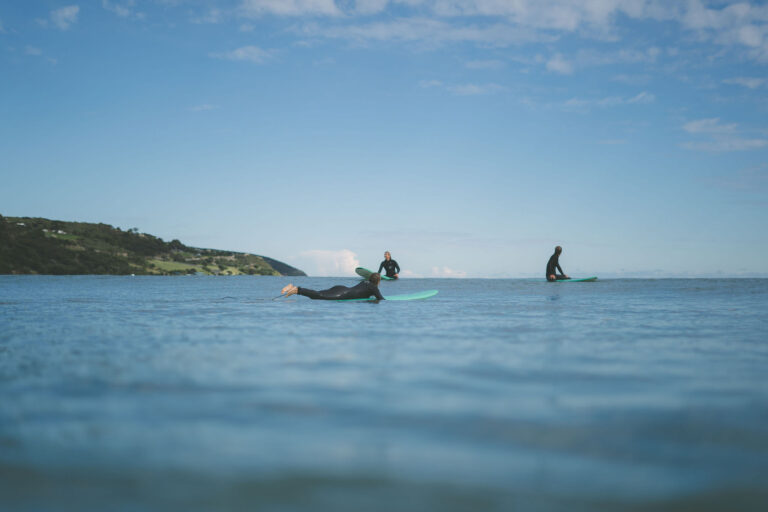
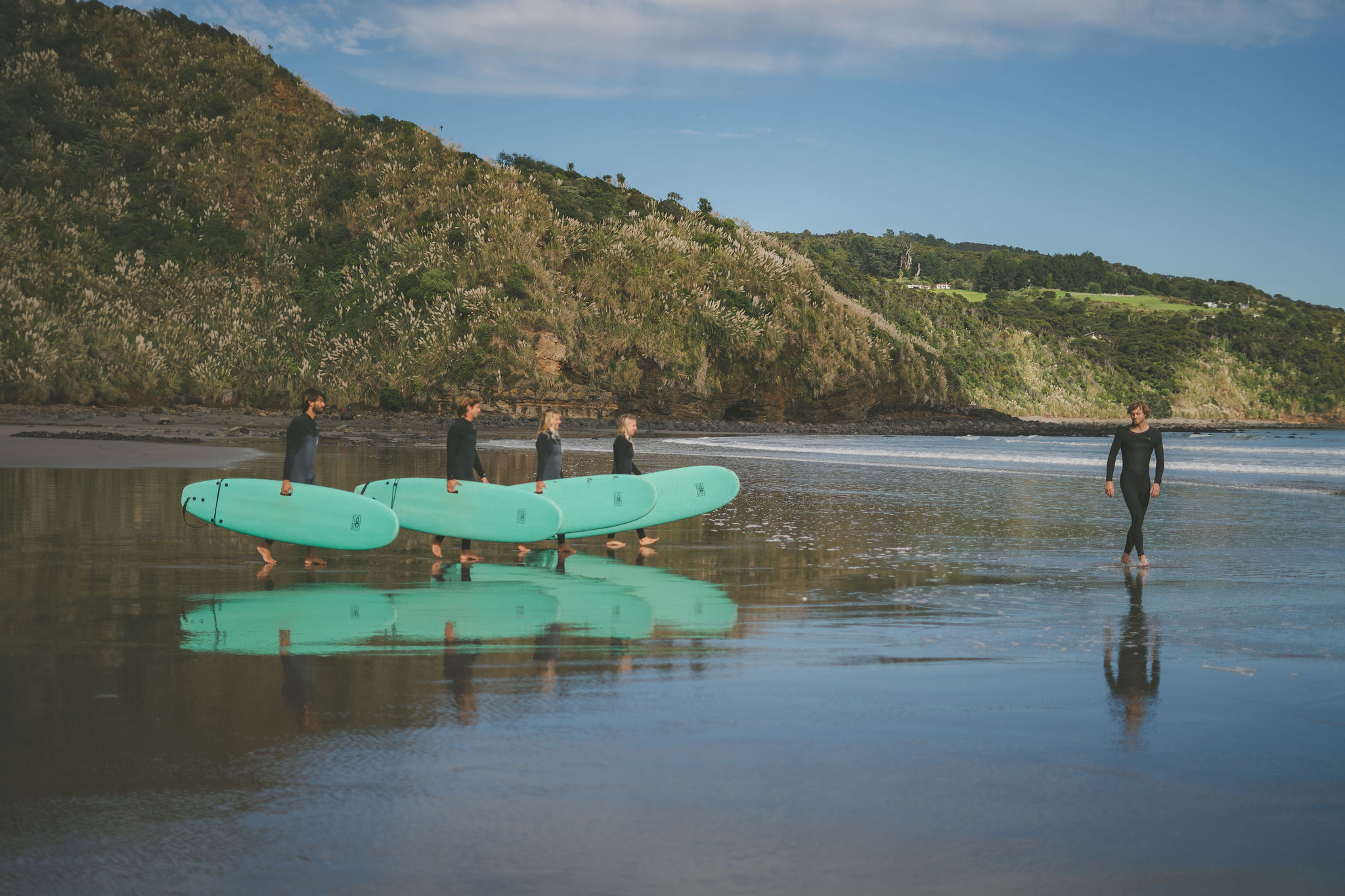
Yes, in most cases you can. Our beginner lessons are held at Ngarunui Beach, which has a sandy bottom and gentle whitewater close to the shore. Beginners stay in waist to chest deep water, so you can stand up between waves.
Of course, being around the ocean always carries some risk. That is why we brief every group on the conditions of the day, and why instructors stay close to the students. If you are worried, you are not alone. Plenty of our students start out feeling exactly the same.
How we keep beginners safe
Safety starts before anyone gets wet. We spend time on the beach explaining how the waves, tides and currents behave that day. We also show you how to spot a rip current and what to do if you are caught in one.
Then, on the water, the instructors keep the group close together. Because the groups stay small, each person gets plenty of attention. Instructors can step in quickly if someone needs help.
Why shallow water matters
Learning in shallow water is the most important safety feature for beginners. When you can touch the bottom, you feel more in control. If you fall off your board, you can simply stand up. The sand also feels soft underfoot, unlike the sharp rocks at the point breaks.
That is the reason we never take students to the points. Our guide to Raglan’s point breaks explains the hazards in more detail.
Surf lessons for weak swimmers: what to tell us
Honesty helps us look after you. When you book, or when you check in at the surf truck, tell the team about your swimming level. Let us know about any medical conditions too, as well as any fears you have about the ocean.
With that information, your instructor can pay a little extra attention to you. They may also place you closer to the shore, and choose waves that suit your confidence. There is no need to feel embarrassed, because we hear this all the time.
Building confidence on the sand first
Before you enter the water, you practise on the beach. You learn how to lie on the board, how to paddle and how to pop up. Practising on land first means the movements feel familiar once the waves arrive.
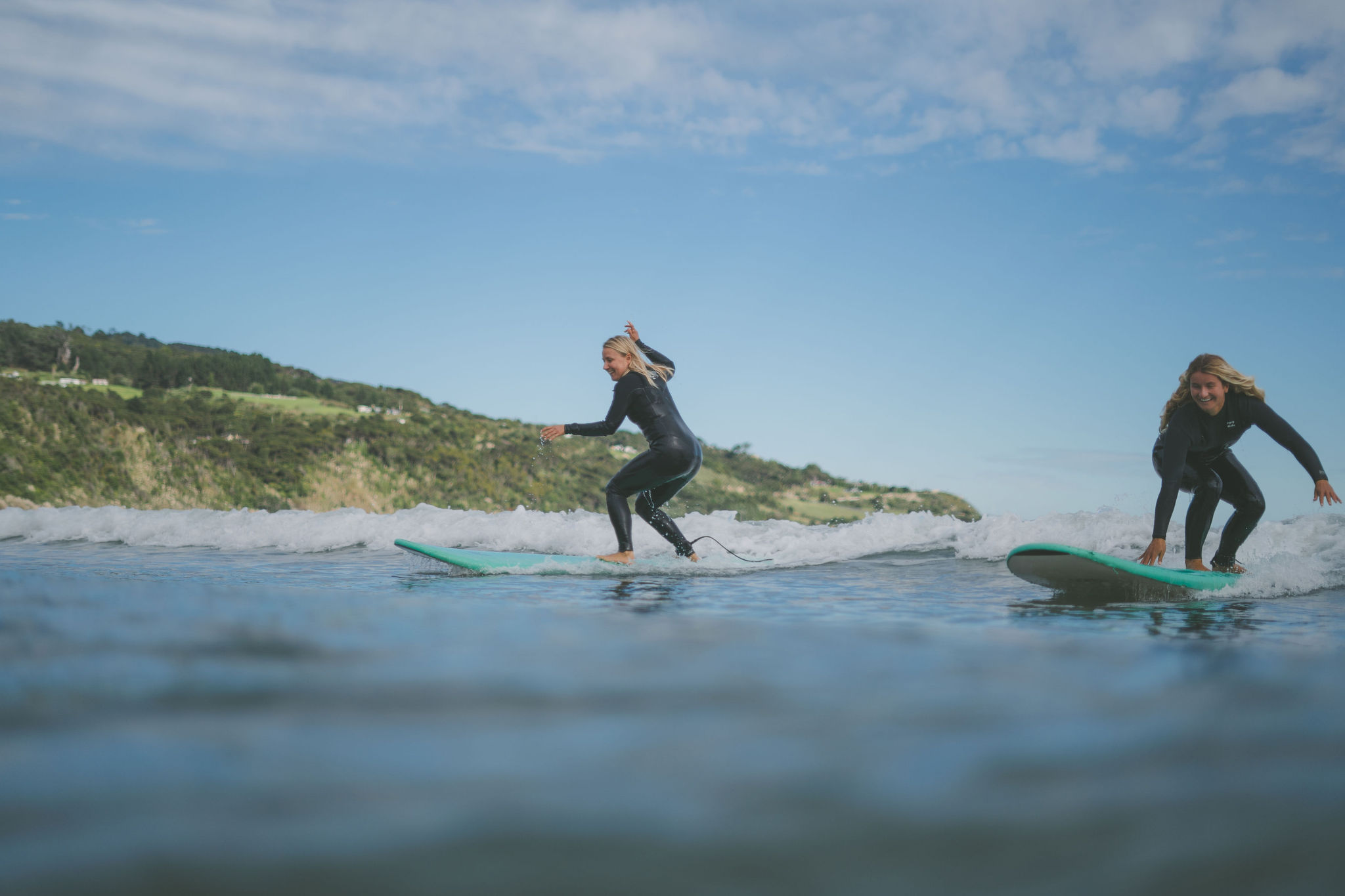
Next, you head into the shallows with your instructor. Your first rides are on the whitewater, lying on your belly. This part is a lot of fun, and it helps you get used to the feel of the ocean.
Respecting the ocean
A calm, respectful attitude is the best safety tool you can have. Take your time, listen to your instructor and stay inside the area they set. If you feel tired, say so, and take a break on the beach.
It also helps to learn about currents. Our post on rip currents explains how to spot them and what to do. For official beach safety advice, Surf Life Saving New Zealand is a trusted source.
Surf lessons for weak swimmers: who should check with us first
Most people can join a group lesson, but a few should get in touch first. If you have a medical condition, or if you are very anxious about deep water, send us a message. Our team will talk through your situation and advise you honestly.
Please also remember that our group lessons suit ages 10 and up. You can reach us through our contact page, or have a look at our FAQ page for quick answers.
Tips to feel more comfortable
A few small habits can make a big difference:
- Arrive early, so you do not feel rushed.
- Eat a light meal and drink some water beforehand.
- Tell your instructor how you feel, and ask any questions.
- Take your time getting used to the water.
- Focus on having fun, rather than on standing up straight away.
If you would like a full picture of the day, read our guide to your first surf lesson.
Where to go from here
Once you feel at home in the shallows, you can build your skills step by step. Many students join a multi-day package, because each lesson builds on the last. You can also learn the pop-up in more detail with our guide on how to pop up on a surfboard.
Frequently asked questions about surf lessons for weak swimmers
Swimming skills help in the long run, but they are not required for our lessons. Beginners stay in waist to chest deep water over a sandy bottom.
Yes. Let the team know your swimming level when you book or check in, so your instructor can look after you.
Our group lessons and packages suit ages 10 and up.
Feeling ready? Book a lesson or get in touch if you have questions.