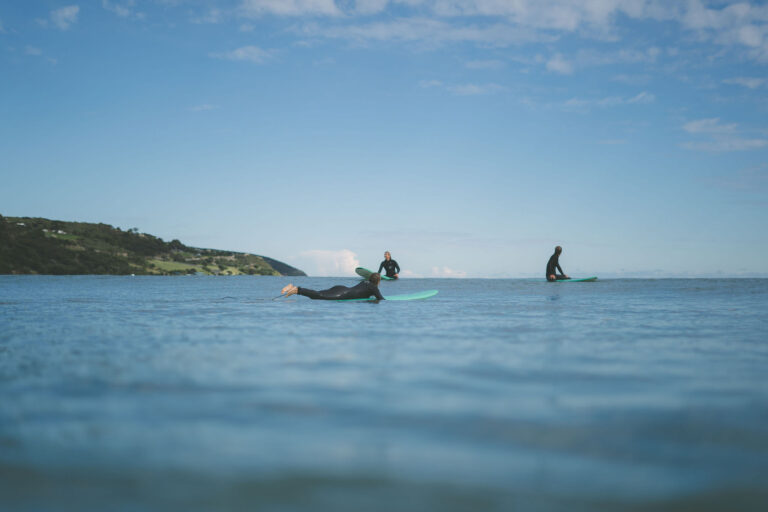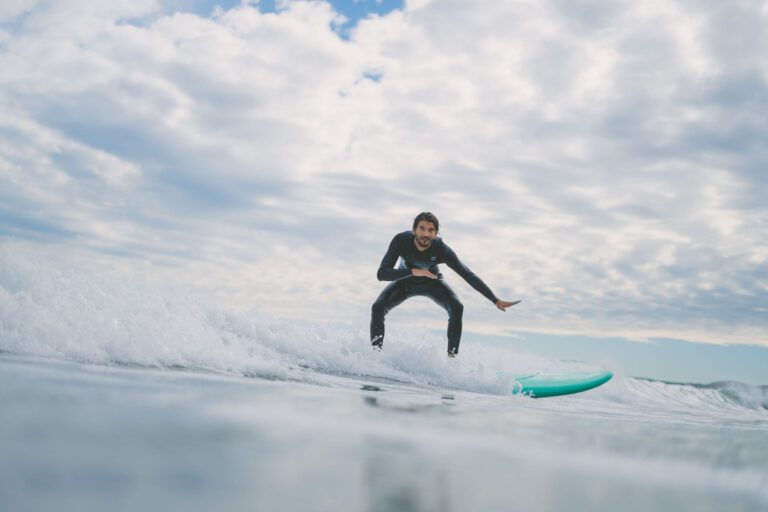
Quick answer Ocean safety for students starts on the beach. Students should learn how to read waves, tides and rip currents, swim or surf within their depth and follow adult instructions. Green Wave opens every school lesson with a safety briefing, and students stay in shallow water with instructors beside them.
Teaching ocean safety for students is one of the most valuable things a school can do before a coastal trip. A few simple habits can prevent many problems. This post covers the key topics, so teachers and parents can prepare students for the beach.
Why ocean safety for students matters
New Zealand is surrounded by sea, and most students will spend time at a beach. However, many do not know how the ocean behaves. A little knowledge goes a long way. Because of this, students who understand the basics make better choices, and they feel more confident.
So ocean safety fits well into school trips. It also links to science, health and physical education. Learning on the beach helps too, because students can see the conditions for themselves.
Understanding waves, tides and swell
Waves are created by wind and swell, which travels across the ocean. Then, as they near the shore, they break in shallow water. The tide changes the water level twice a day, and that changes how the waves break.
Students can explore this idea in class. For example, they can compare tide times and wave sizes across a week. Our post on tides for surfing explains the basics in plain language.
Spotting rip currents
A rip is a strong flow of water that runs from the shore back out to sea. Also, it can carry swimmers away from the beach. Students should learn the signs: a gap in the breaking waves, darker water and foam moving out to sea.
If they are caught, they should first stay calm, float and signal for help. They should not fight the current. For more detail, read our guide to rip currents.
Ocean safety for students: the basic rules
These simple rules apply to every beach trip:
- Always stay within your depth.
- Swim only where an adult is watching.
- Listen to instructors and lifeguards.
- Never go in alone.
- Get out if you feel tired or cold.
- Ask an adult if you are unsure about conditions.
Practise these rules before the trip, so they become habits.
Sun safety
The sun is strong in New Zealand, and the water reflects it. First, students should apply sunscreen before they go out, wear a hat on the beach and drink plenty of water. Read our guide to sun safety for surfers for more tips.
How our lessons teach ocean safety
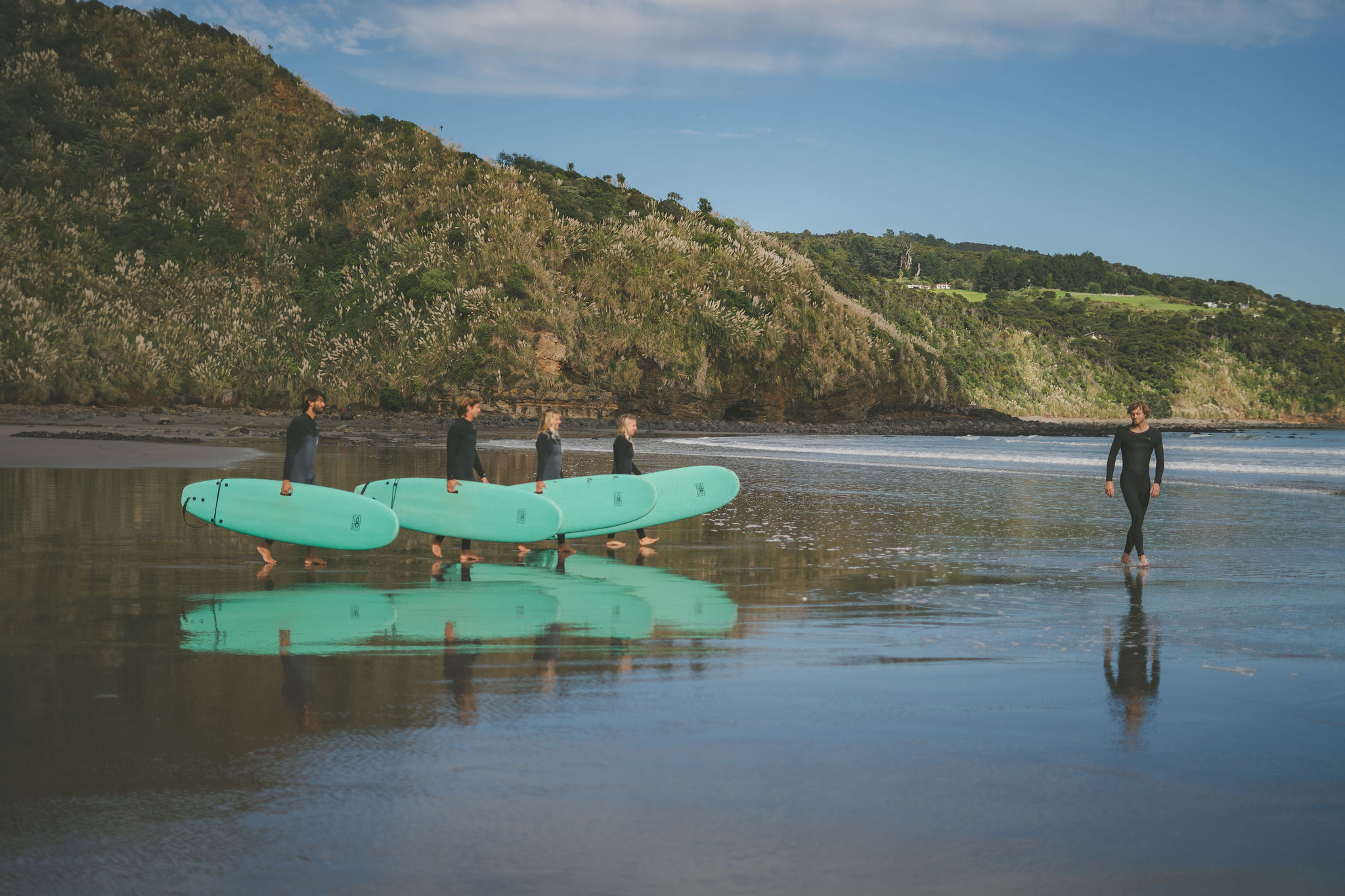
Every school lesson at Green Wave starts with a beach briefing. Instructors explain the tides, rips and swell for that day. Then, students practise on the sand before entering the water. We hold lessons at Ngarunui Beach, which has a sandy bottom and gentle whitewater, and students stay in waist to chest deep water.
We never take students to the rocky point breaks. Read more about our school surf trips.
Preparing students before the trip
Preparation makes the day smoother. First, talk about the rules in class. Show photos of rips and wave patterns, and ask students to explain what they see. Also, send a note home with the packing list and any health questions. Our guide on EOTC surfing has a planning checklist.
A simple class activity
A short class activity can bring these ideas to life. First, show students a photo of a beach, and ask them to find the likely rip. Then, let them compare their answers in pairs. Next, discuss the clues they used, such as darker water or a gap in the waves. Finally, ask them to explain what they would do if they were caught. Because students enjoy working things out for themselves, this activity helps the lessons stick. Also, it gives teachers a quick way to check understanding before the trip.
Staying safe around other beach users
Beaches are shared spaces, so students should respect other people. For example, they should stay away from surfers and swimmers who are using the water. Also, they should keep their belongings tidy and take rubbish home. Meanwhile, they should watch younger children, and tell an adult if someone seems to be in trouble. Because the ocean can change quickly, these habits matter. Together, they make the beach safer and more enjoyable for everyone.
Ocean safety for students at school camps
On a longer camp, students spend more time near the water. First, set clear boundaries, and brief them each day. Use a buddy system, so nobody is alone. Also, make sure staff know where students are at all times. Our guide to a school camp in Raglan covers more planning ideas.
Where to find more advice
Surf Life Saving New Zealand is a trusted source of beach safety advice. Teachers can also read the Ministry of Education’s guidelines for education outside the classroom. If you would like help planning, contact our team.
Frequently asked questions about ocean safety for students
Know your limits. Stay within your depth, and swim only where an adult is watching.
Stay calm, float and signal for help. Do not fight the current.
Yes. Every school lesson starts with a beach safety briefing.
Planning a coastal trip? Contact us and we will help.