Quick answer Catching green waves means riding unbroken waves instead of whitewater. To start, paddle out past the breaking waves, choose a small wave, turn towards the beach and paddle hard as it lifts you. Then pop up and look along the wave. Most surfers need several sessions before this feels natural.
Catching green waves is a big milestone for any surfer. Instead of riding whitewater, you ride the open face of an unbroken wave. It is more exciting, and it opens up turning and longer rides. This guide explains how to prepare and how to get started.
What are green waves?
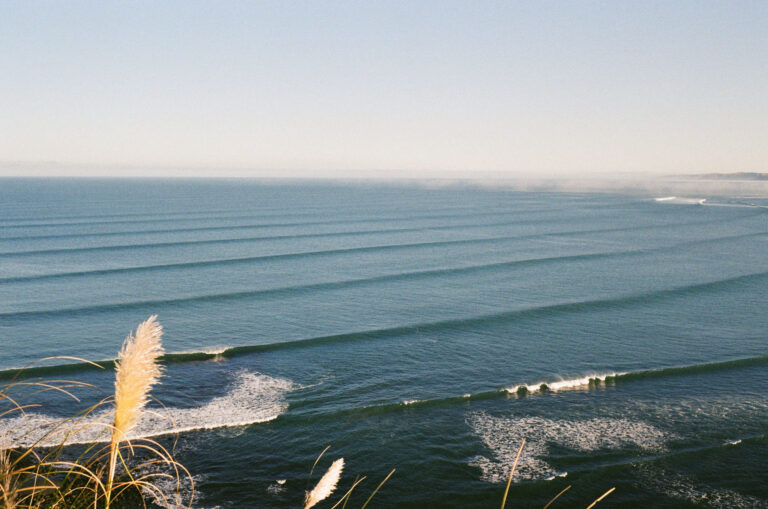
A green wave is a wave that has not broken yet. It is called green because the water looks smooth and unbroken. Whitewater, in contrast, is what is left after the wave has broken.
On a green wave, you can angle along the face and steer. That is why most surfers love the feeling. It is also why this step takes more skill than riding whitewater.
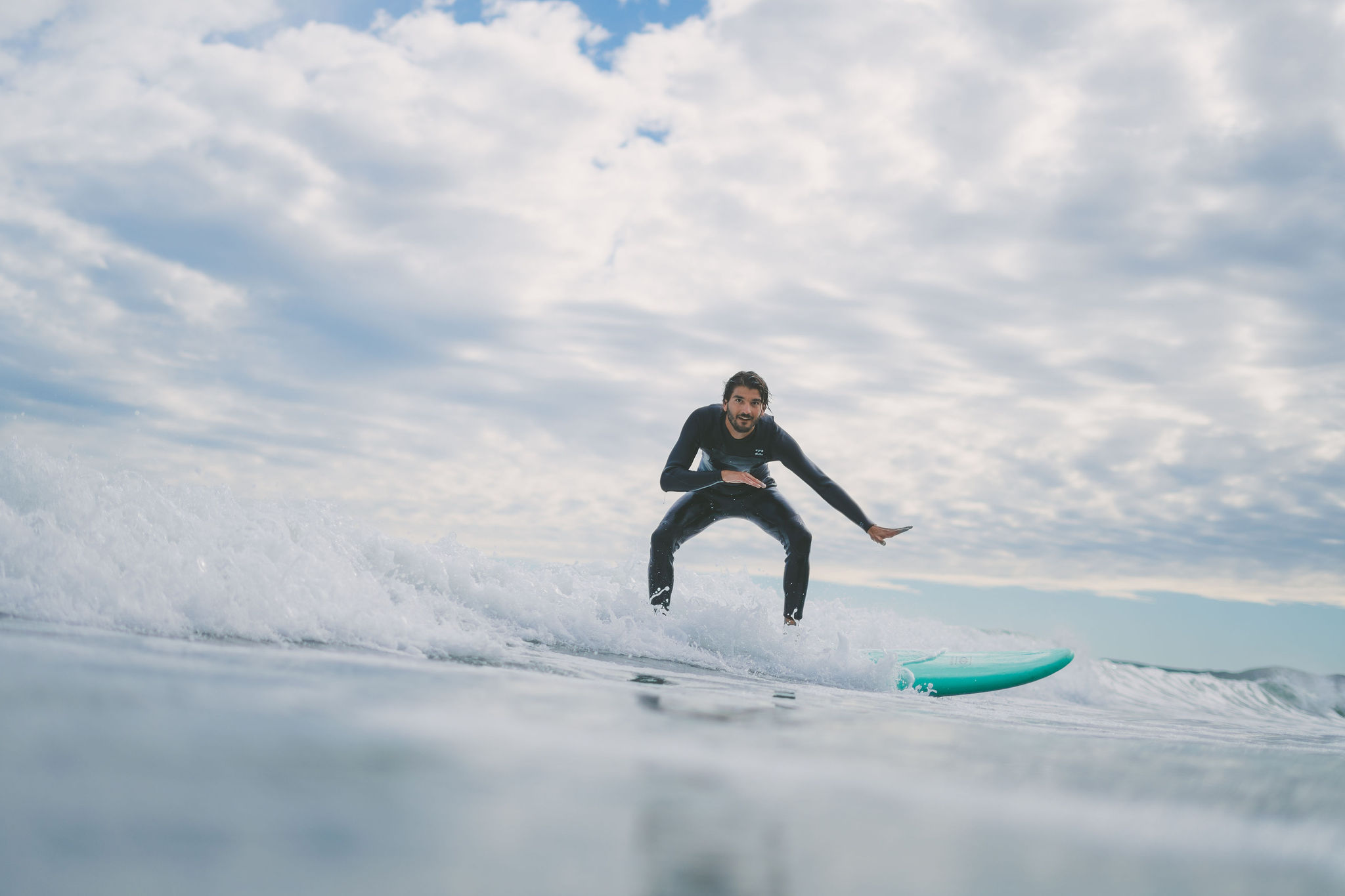
Because green waves are steeper, you also need to commit when you paddle. Hesitating can leave you at the top of the wave, which makes the drop harder. So paddle with confidence, and trust your pop-up.
Are you ready for catching green waves?
Before you move on, check that you are comfortable with a few things:
- Popping up feels quick and reliable.
- Riding whitewater all the way to the beach feels easy.
- Steering a little, left or right, comes naturally.
- You feel comfortable in deeper water.
- You know the basics of etiquette and safety.
If you tick most of these, you are probably ready to try.
Also, the checklist is only a guide. Your coach can tell you in a few minutes whether you are ready, and they can choose the right spot and the right waves.
Paddling out
First, paddling out is the challenge. You need to get past the breaking waves, and that takes stamina. Paddle with long, strong strokes. When a wave comes, duck under it, or push your board through. Our guide on surf fitness can help you prepare.
Choosing a wave
Next, look for a small, gentle wave. Watch it as it approaches, and judge where it will break. Then position yourself so that the wave lifts you before it breaks. Start with smaller waves, because they are slower and easier to catch.
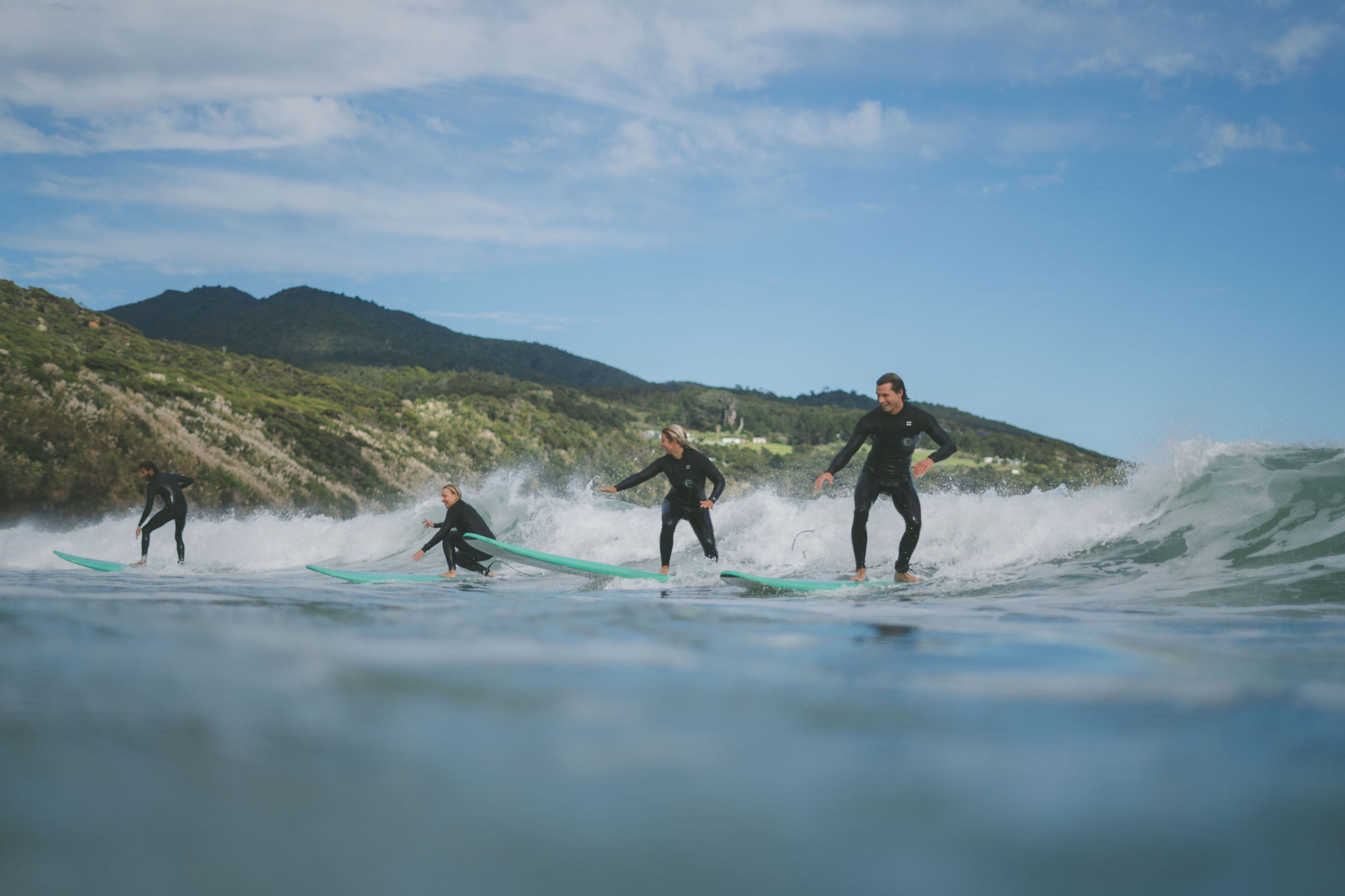
Timing and paddling for catching green waves
Timing is everything. Turn your board towards the beach as the wave approaches. Start paddling early, and paddle hard. When you feel the wave lift the tail of your board, take two more strokes. Then pop up.
If you are not sure, keep paddling. It is better to commit than to hesitate. Our guide to how to pop up on a surfboard covers the standing part.
Looking and steering
Once you are up, look along the wave in the direction you want to go. Your board will follow your eyes. Lean gently, and angle across the face. Also, do not try to turn too sharply at first. Small movements are enough.
Staying safe while catching green waves
Also, safety matters more in deeper water. Stay aware of other surfers, and follow the rules of surf etiquette. Check for rips, and know where you are. Our guide to rip currents is a good read. For beach safety advice, Surf Life Saving New Zealand is a helpful resource.
Common problems
Most beginners hit a few snags. When the wave passes under you, paddle earlier. Should the nose dig in, move back a little. And if you fall, relax and try again. Over time, the movement becomes easier. See our guide to beginner surfing mistakes for more.
Learning with a coach
A coach can tell when you are ready, and they can put you in the right spot. At Green Wave, our multi-day packages help students build up to green waves. Read about progressive surf lessons to see how it works. You can also book a lesson online.
Drills for catching green waves
Practice makes the process easier. First, spend time in the whitewater, and focus on a smooth, quick pop-up. Next, try paddling for small waves in the shallows, and aim to feel the lift. Then work on your timing, by counting your strokes as each wave arrives. Also, practise looking along the wave as you stand, rather than at your board. Because every wave is different, repeat these drills often. Soon, the movements will feel natural.
Mindset for catching green waves
The mental side matters too. Many beginners feel nervous about deeper water, and that is normal. However, staying calm helps your body work well. Take a breath, and focus on one thing at a time, such as paddling hard. Also, celebrate every attempt, even the missed ones. Because each try teaches you something, you are always improving. Be patient, and enjoy the process.
Frequently asked questions about catching green waves
A green wave is an unbroken wave. You ride the open face rather than the whitewater.
It varies, but most people need several sessions after learning to ride whitewater.
A coach helps a lot, because they can choose the right wave and give feedback.
Ready for the next step? Book a lesson and we will help you get there.